Vision meets language
Interpret visual information through a vision-language model. Explore reading, recognition and contextual understanding for your application.
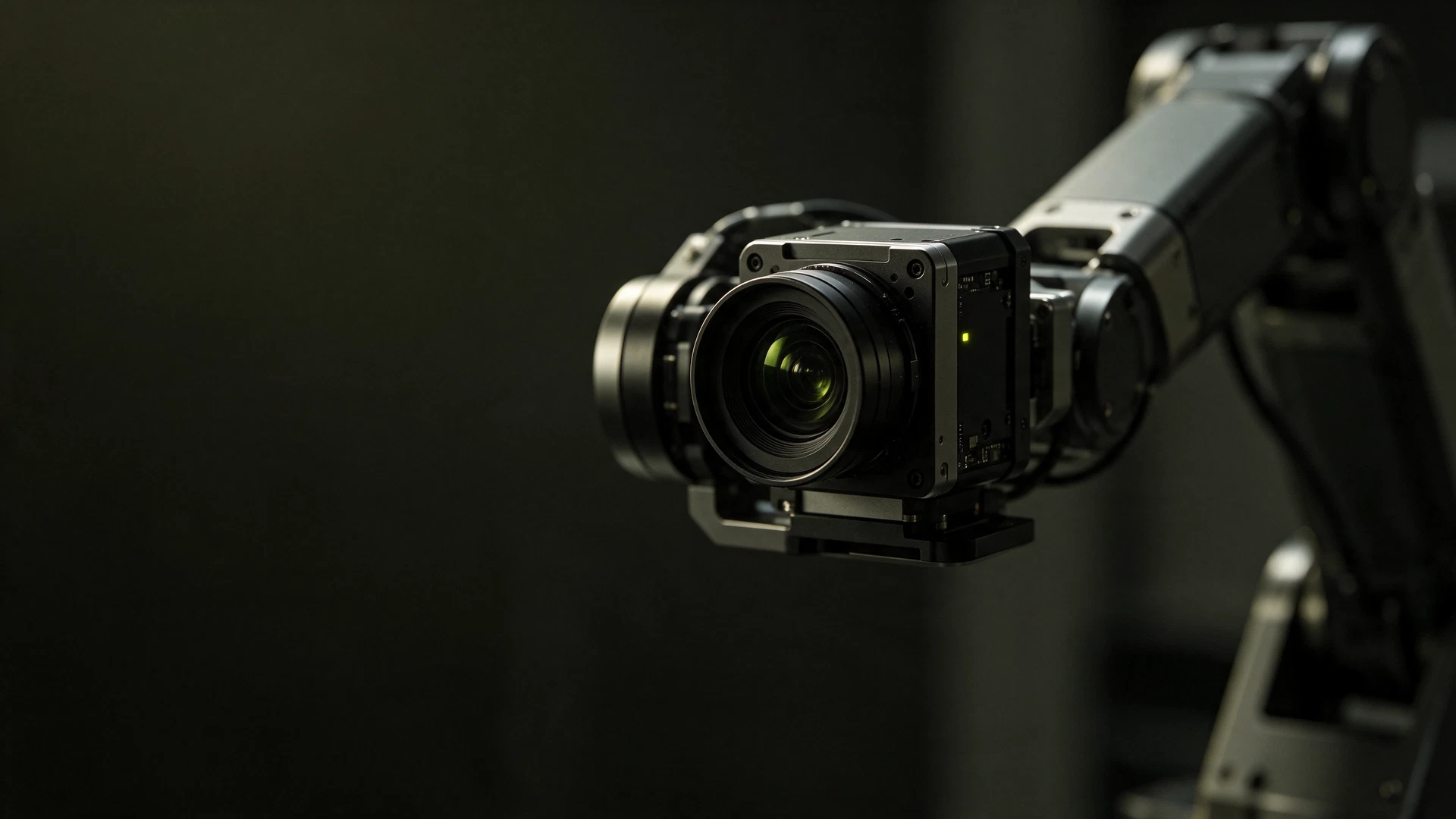
A vision-language model that sees and interprets. On your device. Offline. Built for a world that doesn't always have a connection.
We've developed an autonomous, embedded vision-language model (VLM) that works without an internet connection. Now, we're opening the conversation with the people building what comes next.
Interpret visual information through a vision-language model. Explore reading, recognition and contextual understanding for your application.
The VLM runs locally on an embedded device. Its inference does not require sending images to a cloud service.
Operate without a network connection to the model. Reduce cloud dependency in disconnected or connectivity-constrained environments.
A simple principle: bring intelligence to the device, not the device to the cloud.
From the research bench to real-world operations. These are possibilities to explore together, not claims of completed deployments.
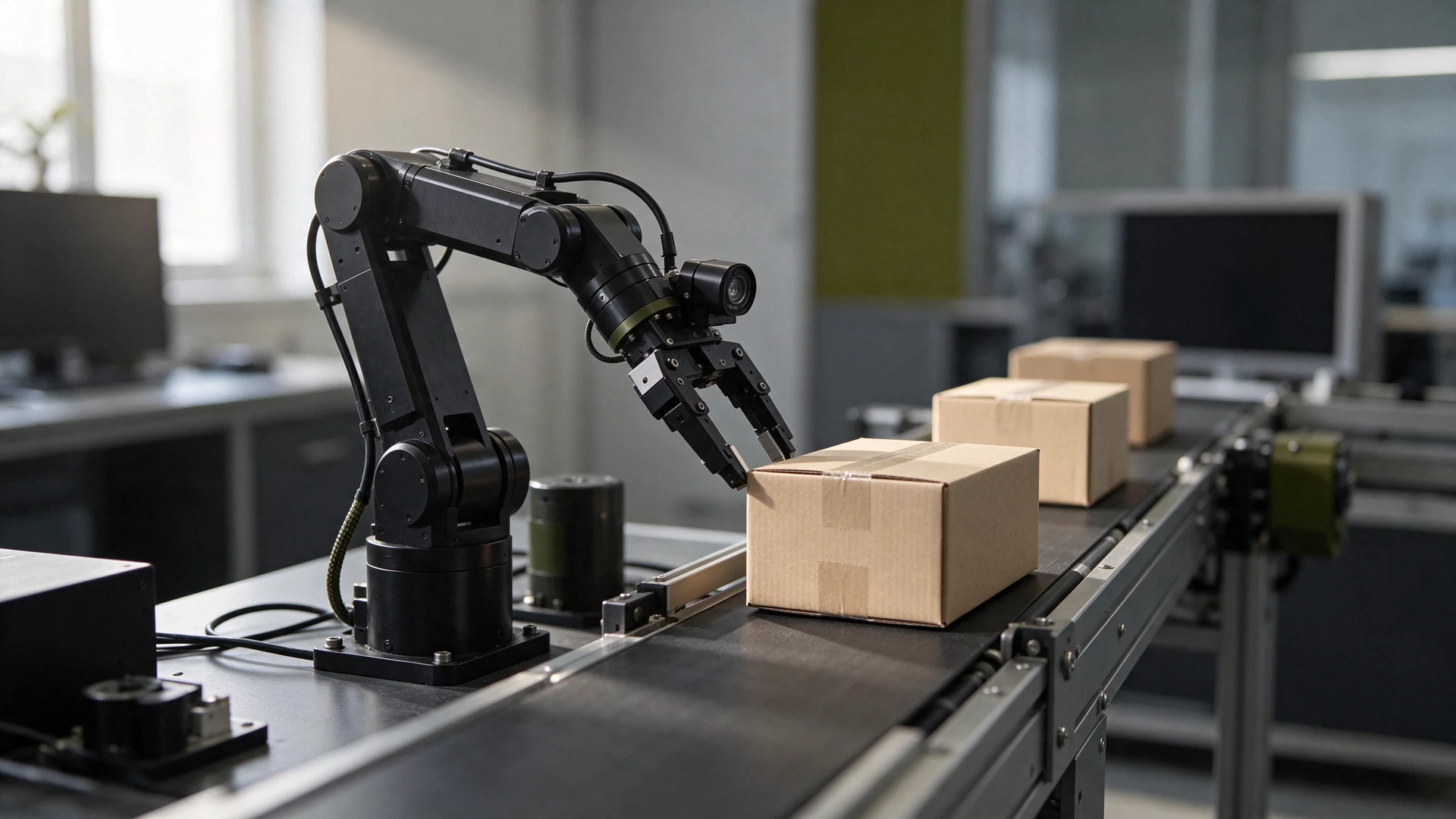
For robot manufacturers, platform builders and hands-on early adopters exploring a new layer of visual understanding.
Explore: on-device perception for experimental robotic platforms.
Discuss this applicationFor university and independent labs investigating embedded AI, robotic perception and automation in disconnected settings.
Explore: an offline VLM within your research environment.
Discuss this applicationExplore autonomous reading and identification of labels, packages or objects as an entry point into warehouse automation.
Explore: local visual interpretation along a logistics workflow.
Discuss this applicationExplore local visual processing where connectivity and data confidentiality matter, without a cloud connection to the VLM.
Explore: non-sensitive research, logistics and equipment identification.
Discuss this applicationOffline inference can reduce the need to transmit visual data. It does not, by itself, guarantee system security, tactical secrecy or regulatory compliance. Those requirements must be assessed for each integration.
You don't need a finished specification. If you're building robots, researching automation or testing what's possible with edge AI, we'd like to hear what you're working on.
Start a conversationTell us about your device, your environment and the problem you want to solve. A first idea is enough.
Let's discuss hardware constraints, local processing and what an integration would need to accomplish.
If there's a fit, we can explore a research collaboration, a proof of concept or an implementation conversation.
No off-the-shelf compatibility or implementation timeline is implied. Technical feasibility is evaluated together.
Tell us a little about your project. We'll use these details to start a relevant conversation about a possible integration.
Research questions, experimental platforms, concrete challenges. We're open to all implementation conversations.